> For the complete documentation index, see [llms.txt](https://docs.platform9.com/llms.txt). Markdown versions of documentation pages are available by appending `.md` to page URLs; this page is available as [Markdown](https://docs.platform9.com/managed-openstack/authentication-and-authorization/authentication-saml-gsuite.md).
# Single Sign-on with Google G Suite
Platform9 supports single sign-on (SSO) with Google G Suite (G Suite).
To configure G Suite integration, you must have a G Suite Apps administrator account.
As a G Suite administrator, you can enable SSO through G Suite for other users in the organization. This enables the users to sign in to Platform9 Managed OpenStack, by using their G Suite credentials.
## Enable SSO Through G Suite for Platorm9
Follow the steps given below to integrate Google with Platform9 for SSO.
### Step 1 - Login to G Suite
Login to G Suite as the Apps administrator and follow the first few steps given in [Google: Set up your own custom SAML application](https://support.google.com/a/answer/6087519) to set up your SAML custom app.
### Step 2 - Create custom SAML app
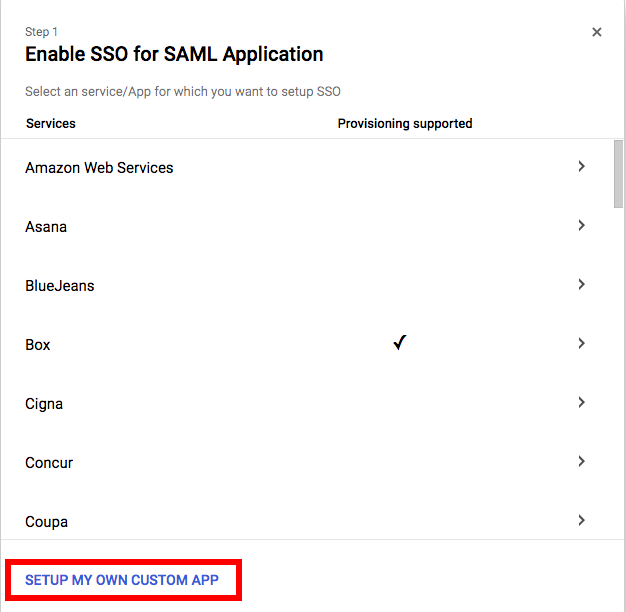
From the "SAML Apps" page under the admin section, click the yellow plus sign in the bottom right-hand corner to begin adding a new SAML application, then click **Setup my own custom SAML App**.
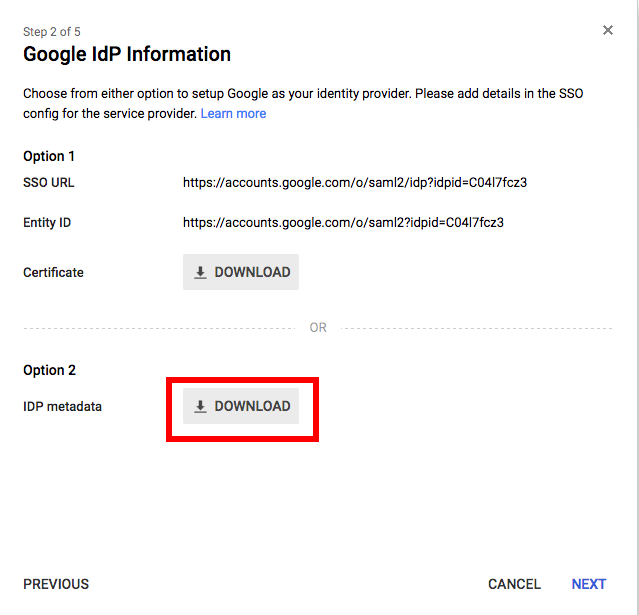
Download the IdP metadata XML file and email this to .
Then, click **Next**.
### Step 3 - Configure basic app information
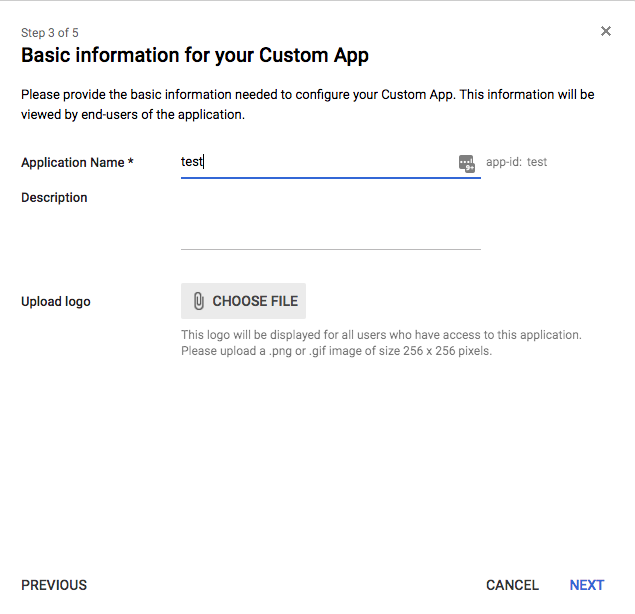
Specify the name and description of the custom app, and optionally upload a logo for the custom app.
Click **Next**.
### Step 4 - Specify Platform9 (service provider) details
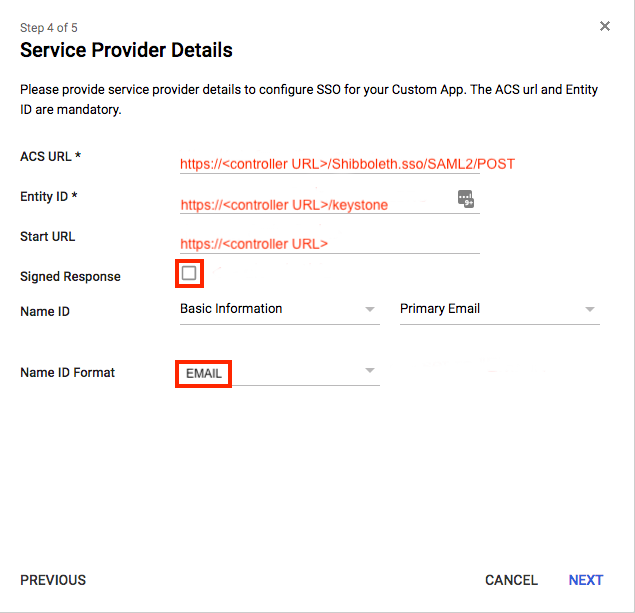
Specify the ACS, Entity ID, and Start URLs as follows.
* **ACS URL**: https\:///Shibboleth.sso/SAML2/POST
* **Entity ID**: https\:///keystone
* **Start URL**: https\://
* Select the **Signed Response** check box.
* Set the Name ID Format to "EMAIL".
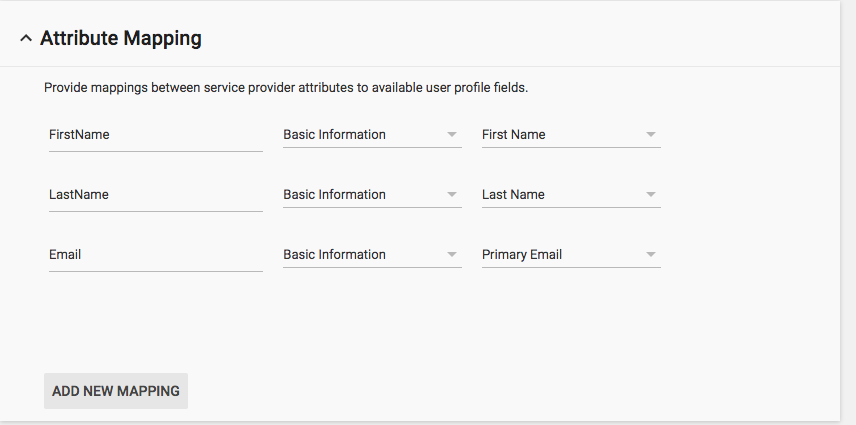
### Step 5 - Configure exported SAML attributes
Configure the Platform9-required the FirstName, LastName, and Email attribute mappings. Click **Add New Mapping** to add an attribute mapping.
Click **Finish** to complete the SAML application setup.
### Step 6 - Create SSO Group Mappings in Platform9
After receiving a confirmation email that the Platform9 Support team has received your IdP metadata & enabled SSO on your environment, login to Platform9 Clarity UI as an administrator. Now, follow the steps 2 through 5 given in the [Integrating Single Sign-On (SSO) Support with Platform9 Managed OpenStack](/managed-openstack/authentication-and-authorization/single-sign-on-sso.md) article.
Once this is done, integration of G Suite with Platform9 for SSO is complete.
---
# Agent Instructions
This documentation is published with GitBook. GitBook is the documentation platform designed so that both humans and AI agents can read, navigate, and reason over technical content effectively. Learn more at gitbook.com.
## Querying This Documentation
If you need additional information that is not directly available in this page, you can query the documentation by asking a question.
Perform an HTTP GET request on the following URL with the `ask` and `goal` query parameters:
```
GET https://docs.platform9.com/managed-openstack/authentication-and-authorization/authentication-saml-gsuite.md?ask=&goal=
```
`ask` is the immediate question: it should be specific, self-contained, and written in natural language.
`goal` is what the user is ultimately trying to achieve, the reason they need the answer. Sharing it helps GitBook give you a better, more relevant answer. A goal is most helpful when it describes the outcome the user wants rather than restating the question. For example, with `ask=how do I create an API token`, a goal like `automate deployments from our CI pipeline` lets GitBook tailor the answer to that use case.
The response will contain a direct answer to the question and relevant excerpts and sources from the documentation.
Use this mechanism when the answer is not explicitly present in the current page, you need clarification or additional context, or you want to retrieve related documentation sections.